
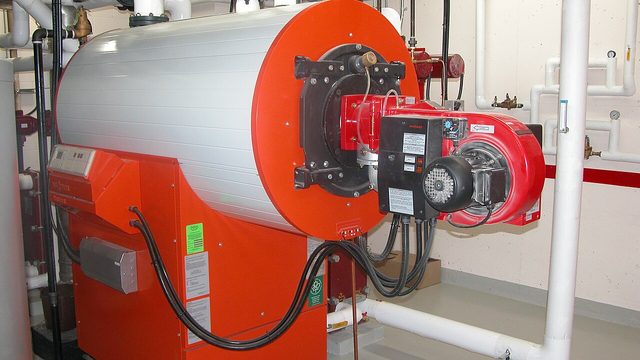
When a packaged boiler stops and the burner control shows a lockout, the first instinct is to press reset. Sometimes the boiler restarts and runs for weeks. Sometimes it locks out again within minutes. The difference is in what the control was checking at the moment it tripped, and that is the most useful piece of evidence you have.
The sequence a burner control runs
Whatever the brand, a flame safeguard or burner management control steps through broadly the same stages on every start:
- Standby: limits and interlocks must be closed before a start is allowed (pressure or temperature limits, low-water cutoff, fuel pressure switches).
- Pre-purge: the combustion-air fan runs to clear the furnace, and the air-flow proving switch must make.
- Pilot or ignition trial: the igniter fires and the pilot (or direct-spark main flame) is admitted for a short, fixed trial time. The flame detector must prove flame within that time.
- Main-flame trial: the main fuel valves open and flame must stay proven while the pilot is withdrawn.
- Run: the burner modulates with demand. Flame, air flow and limits are supervised continuously.
- Post-purge: the fan clears the furnace after shutdown.
Recycle, shutdown or lockout
A limit opening during normal operation (for example steam pressure reaching the operating limit) is a normal shutdown: the burner stops and restarts when the limit closes. A safety failure, such as no flame during the trial or loss of flame during run, normally ends in a lockout that needs a manual reset. Some controls are configured to recycle once before locking out. Knowing which of these happened narrows the search immediately.
What the stage of the trip tells you
- Lockout during pre-purge points at air: the fan, the damper and its linkage, or the air-flow switch and its sensing line.
- Flame failure on the pilot or ignition trial points at ignition and pilot fuel: the igniter, ignition transformer and electrode gap, the pilot gas pressure and valve, or a flame detector that cannot see the pilot.
- Flame failure on the main-flame trial points at the main fuel train and the air/fuel ratio at light-off: main valve operation, gas pressure drop when the valves open, or too much air at low fire.
- Flame loss during run points at fuel supply stability, combustion air changes, or a weak or dirty flame detector signal that drops below threshold.
Evidence worth collecting before anyone resets
- A photo of the control display or the fault and lockout history, including the stage where it tripped.
- The control make and model from its label, and the flame detector type (UV, infrared or flame rod).
- The flame signal reading during a normal run, if the control shows it. A signal that has been drifting down is a strong clue.
- Fuel supply pressure at light-off and at high fire, and whether other gas users start at the same time.
- Time of day and steam demand when the trips happen.
Put together, these usually separate an ignition problem from a fuel, air or detection problem before a part is replaced. This is the evidence InduQT’s free boiler diagnostic asks for.